
Continuous Renal
Replacement Therapy (CRRT)DIANOVA X2 represents Dialife’s latest generation of machines. It offers advanced technology, therapy options, and monitoring features while preserving unmatched user-friendliness.
Some of DIANOVA features include:
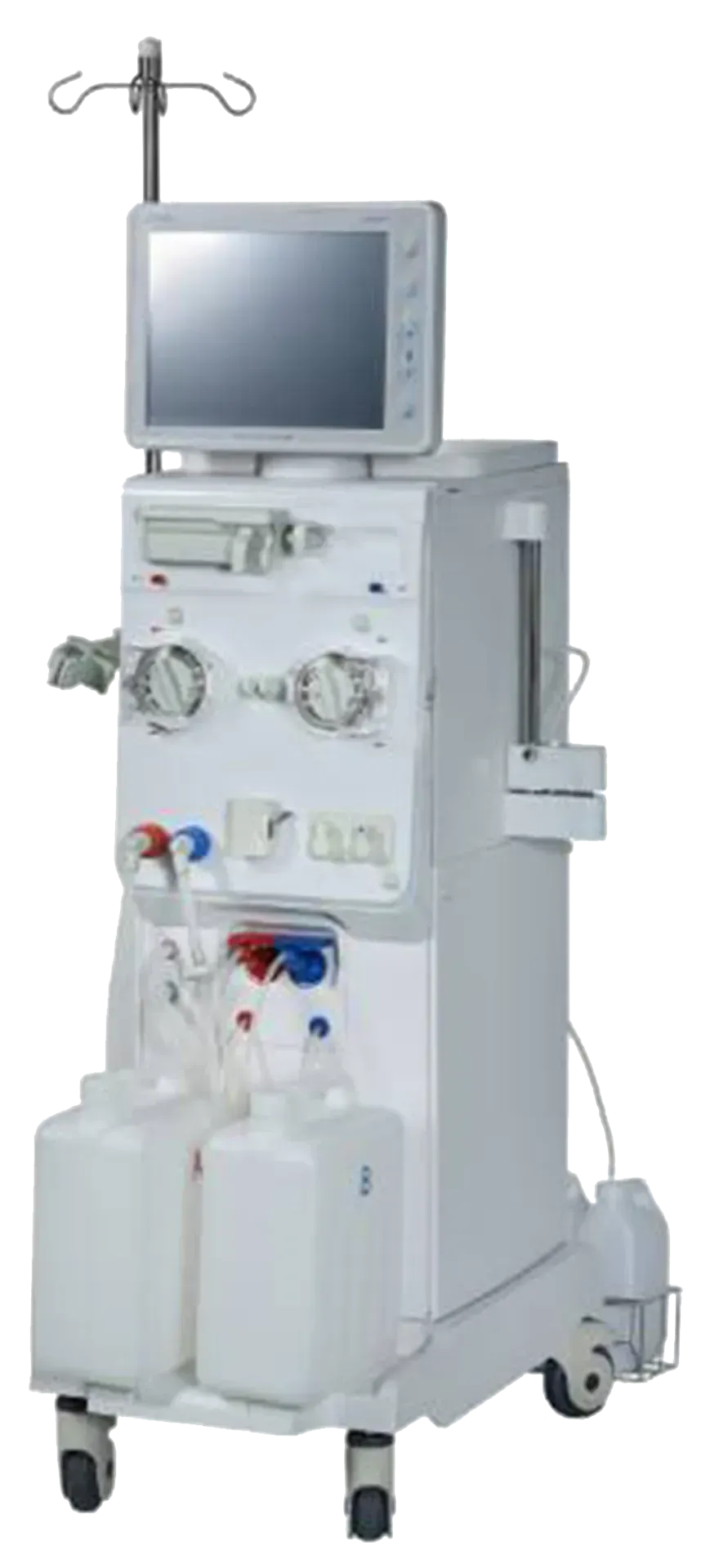
- Flat, rotating 15-inch touch screen for
- increased readability and convenience.
Ingenious, user-friendly software with a high degree of monitoring and personalization. - Automated, online priming without the use of serum nor personnel intervention.
- Heparin pump designed for multiple syringe sizes with automated syringe size detection, self-test alarm system, and heparin profiling.
- VP air detector with a dual ultrasonic and optical monitoring system for precise bubble catching, safe blood return, and continuous micro-bubble detection.
- Endotoxin filtration system: Double-stage on DIANOVA X2 model for HDF online.
- 40 min backup battery in the event of a power outage.
- Facilitated maintenance through smart maintenance mode and clear, simplified organization of electric and hydraulic compartments.
MACHINE MODEL
DIANOVA X2
PUMP SYSTEMS
Blood Pump Heparin Pump Substitution Pump
THERAPIES
Hemodialysis Hemofiltration Hemoperfusion Ultrafiltration Hemodiafiltration Online Hemodiafiltration
Comprehensive Monitoring
ONLINE KT/V MONITORING
Ensures proper dialysis dose is delivered in real-time.
BLOOD PRESSURE MONITORING
Automated and non-invasive system to control blood pressure.
BLOOD VOLUME MONITORING
Allows ultrafiltration monitoring according to blood volume variations.
BLOOD TEMPERATURE MONITORING
Сontrols body temperature to ensure hemodynamic balance.
NETWORK MONITORING
Interface to connect to renal unit software for centralized data management; USB port also available as an alternative to downloading data.
Clinical Applications:
- Management of acute kidney injury (AKI) in critically ill patients.
- Removal of fluid overload, solutes, and toxins during critical care.
- Hemodynamic stabilization in patients with multi-organ dysfunction.
Benefits in CRRT:
- Improved patient outcomes with precise fluid removal.
- Enhanced clinician efficiency through a simplified workflow.
- Versatility to meet diverse clinical needs in ICUs.